


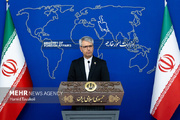
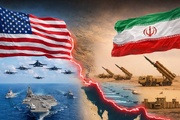
He made the remarks in his weekly press briefing on Monday, emphasizing, "As long as the United States persists in its blockade and military aggression, security will not return to the strategic Strait of Hormuz."
He seized this opportunity to commemorate the name and memory of famous and outstanding Persian poet Hafez Shirazi, noting that Hafez holds a unique and special place among all poets, especially for Iranians and is considered an inseparable part of Iranian-Islamic culture and civilization.
In response to the recent speech by US Secretary of State Marco Rubio, Baghaei emphasized that the address should be viewed as part of America’s cognitive warfare against Iran.
Presenting a distorted picture of historical events to justify Washington’s warmongering is both dangerous and an affront to Greek culture and civilization, he emphasized.
"Mr. Rubio has inadvertently acknowledged important realities, including the fact that Iran has endured for millennia. The West as it exists today, in terms of meaning and thought, would not exist had Iranian and Muslim thinkers not served as translators and interpreters of Greek ideas during the dark ages of the Middle Ages. Iranian civilization has consistently established and sustained itself through acts of connection and creation," he underlined.
Addressing Rubio’s advisors with a sarcastic tone, Baghaei noted, “I urge them to present a copy of the * Divan of Hafez * to the US Secretary of State Rubio, so that he may become acquainted with the refinement of Iranian civilization and culture. The United States cannot portray itself as the representative of Western and Greek civilization.”
The Americans and those who drafted Rubio’s speech were aware of these contradictions but deliberately ignored them in order to justify aggression and violence, he said, adding, “Undoubtedly, European countries and those who consider themselves heirs to Western civilization have a duty to clarify their position on this matter.”
In his reaction to Trump’s recent remarks claiming that Iran has lost its leverage in the Strait of Hormuz, he emphasized the gap between American claims and the reality on the battlefield, stating, “What we are witnessing in the Strait of Hormuz today is not an act of leverage by Iran, but rather the result of a direct US attack on our country's territory.”
Noting that Iran has taken necessary measures in accordance with international law and in defense of its national sovereignty, the foreign ministry spokesman reiterated, “As long as the United States persists in its blockade and military aggression, security will not return to this strategic waterway."
Stating that the security of the Strait of Hormuz is of greater importance to Iran than to any other country, Baghaei added, "Through its acts of aggression, the United States has created trouble not only for the region but also for itself and the entire world. This reality must be kept alive in the eyes of global public opinion."
Elsewhere in his remarks, the spokesperson referred to Iran-Russia Cultural Week, describing it as one of the most magnificent joint cultural events between the two nations.
The cultural event was held in four Russian cities and was warmly received by the Russian public and officials as well.
In response to a question regarding Iran's stance on the recent agreement between Russia and the United States concerning diesel fuel, he said, "Each party makes decisions based on its own interests, and we, as the Islamic Republic of Iran, will act based on our own national interests."
Pointing to the contradiction in the American narrative, Baghaei added, “I find it interesting if the Strait of Hormuz issue had indeed been resolved, why was the American side compelled to turn to Russia to purchase oil?"
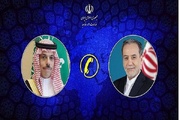
The foreign ministry spokesman then pointed to the recent telephone conversation between Iran’s Foreign Minister Araghchi and his Saudi counterpart bin Farhan, emphasizing, “It is natural for the media to make their own claims. Iran’s consultations with regional countries are ongoing, and we are deeply concerned about recent developments in the Arabian Peninsula.”
Iran once again declares its readiness to assist in any way with dialogue between the Yemeni and Saudi sides. Continued tension serves only the interests of the Zionist regime in the region, and Iran does not accept the continuation of war between two Islamic nations. The people of Yemen have the right to live a dignified life in an atmosphere free from pressure and tension, he continued.
In response to a question regarding the details of the US response to Iran’s seven-day plan and whether a reply has been conveyed to the mediators, Baghaei stated that exchange of messages through mediators is ongoing. What was raised on the sidelines of the UN General Assembly and is known as Iran’s seven-day plan reflected Iran’s legitimate and legal demands.
Lifting the naval blockade, halting the war on all fronts, releasing Iran's frozen assets, and everything else agreed upon in the Islamabad Memorandum of Understanding will be raised as Iran's indisputable rights in any negotiation, he stipulated.
Regarding the recent meeting between the presidents of Iran and Russia and Vladimir Putin’s subsequent phone call with Donald Trump, the foreign ministry spokesperson stated that Iran’s consultations with Russia concerning the nuclear issue are nothing new. Russia played a positive and constructive role in reaching the JCPOA understanding. A relationship based on mutual trust is a valuable asset shared by the two countries, and Iran is committed to preserving and strengthening this bond.
Baghaei emphasized that Pakistan and Qatar continue to play a mediating role between Iran and the United States.
In another part of the press conference, Baghaei pointed to the double standards displayed by regional and European countries regarding the attacks on Yemen and Saudi Arabia, stating this is not the first time Iran has witnessed a dual approach by global powers toward international issues.
Regarding the detention of students in France following the student protest, he stated that Iran has unequivocally condemned this action and made its position clear. Iran also pursued the matter with the French Embassy in Tehran during a meeting convened by the country’s human rights division and conveyed to them its concerns regarding the gross violation of human rights in France.
The French government must address the detention of five to six thousand individuals, the use of violence against students, and the presence of police forces inside classrooms, Baghaei stated.
MNA/6975145






Your Comment